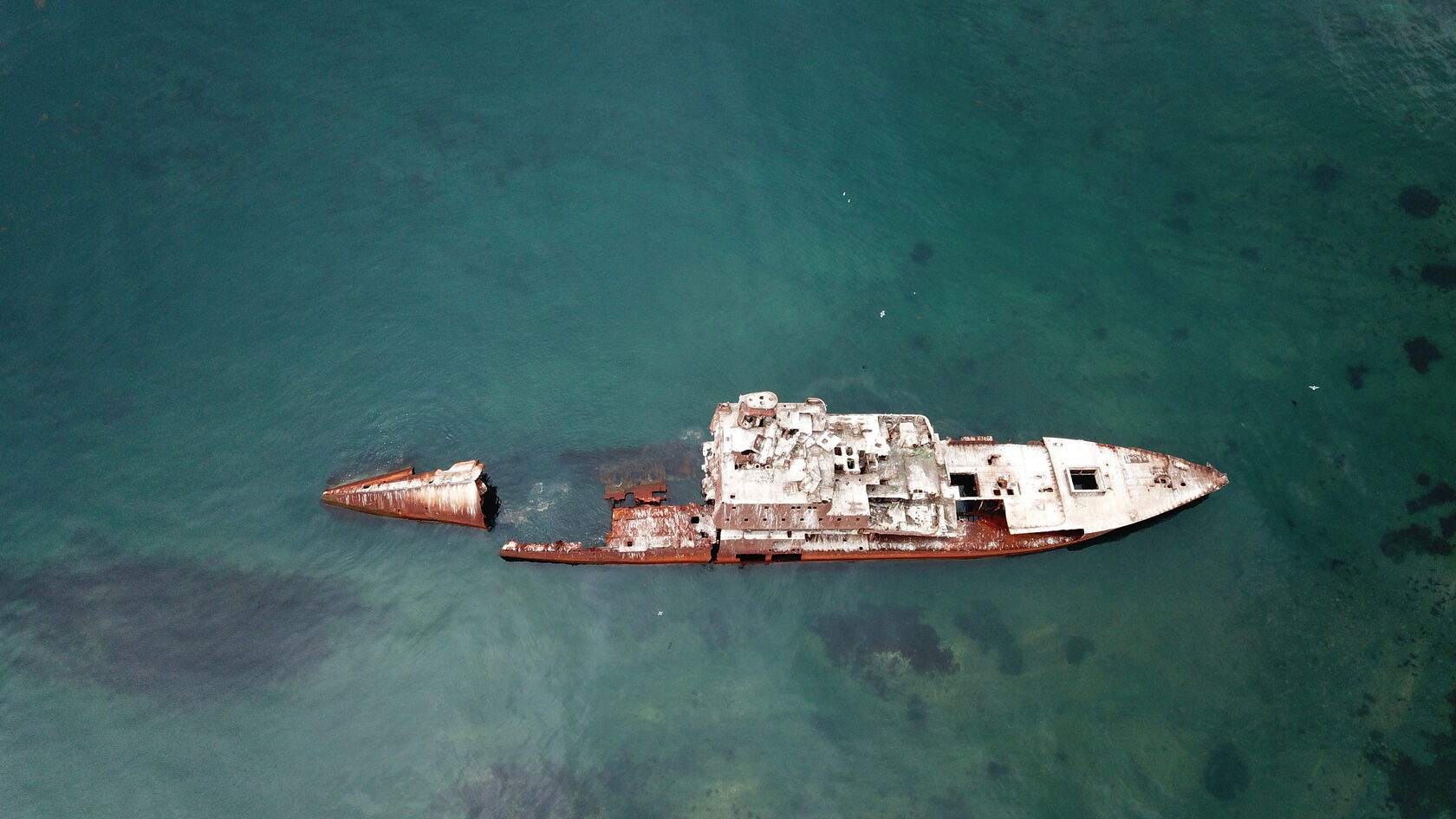
The calculation nuances of environmental damage by abandoned ships.
Damage to the environment and calculation of the extent of harm caused by submerged or abandoned vessels to water bodies is quite often subject to arbitration. Related arbitration processes are usually initiated by the regional units of the «Federal Environmental Service», which involves legal entities that operate fleets in one way or another. To understand the full picture of formation of economic (monetary) equivalent of the damage caused, it is necessary to have special knowledge and experience in the field of operation of the fleet, to understand the origins of its calculation, not just use the formulas given in the methodology. As an example, consider the practice of application by the Arbitration Courts «Methods for calculating the amount of damage caused to water bodies due to violation of water legislation» (Registered in the Ministry of Justice of Russia 25.05.2009 N 13989), approved by the Order of the Ministry of Nature of Russia from 13.04.2009 N 87 (ed. from 26.08.2015) (more on Methodology).
According to para. 17 of this Methodology, the calculation of the economic equivalent of the amount of damage caused by the burial in the water area of vessels taken out of service is carried out according to the formula:
According to para. 17 of this Methodology, the calculation of the economic equivalent of the amount of damage caused by the burial in the water area of vessels taken out of service is carried out according to the formula:
Y= K x K x H x B,
Y - the amount of damage in monetary equivalent in thousands of rubles;
K, K - certain empirical factors determined according to the same Methodology;
H - tax of 40,000 rubles per ton;
«B - the tonnage of abandoned vessels and other floating equipment (their parts and mechanisms), other large-scale waste production and consumption (items), defined in accordance with paragraph 25 of this Methodology, etc.» [21].
The judicial practice in cases involving the calculation of the amount of damage caused to a water body is limited to establishing the fact of the existence of the damage. Courts, including the Supreme Court, do not assess the applicability of the method itself in a particular case and do not explain the algorithm for its application. Reducing its solutions to the following formulations. For example:
- Paragraph 17 of the Methodology N 87 establishes the procedure for calculating the amount of damage caused to water bodies by dumping and burial in them wastes from production and consumption, including ships and other floating equipment (parts and mechanisms), Other large-scale waste (items) from production and consumption. Since the current environmental legislation does not provide for a different calculation of the amount of damage to the water object; the fact that the vessel has been flooded, is confirmed...» [22]
K, K - certain empirical factors determined according to the same Methodology;
H - tax of 40,000 rubles per ton;
«B - the tonnage of abandoned vessels and other floating equipment (their parts and mechanisms), other large-scale waste production and consumption (items), defined in accordance with paragraph 25 of this Methodology, etc.» [21].
The judicial practice in cases involving the calculation of the amount of damage caused to a water body is limited to establishing the fact of the existence of the damage. Courts, including the Supreme Court, do not assess the applicability of the method itself in a particular case and do not explain the algorithm for its application. Reducing its solutions to the following formulations. For example:
- Paragraph 17 of the Methodology N 87 establishes the procedure for calculating the amount of damage caused to water bodies by dumping and burial in them wastes from production and consumption, including ships and other floating equipment (parts and mechanisms), Other large-scale waste (items) from production and consumption. Since the current environmental legislation does not provide for a different calculation of the amount of damage to the water object; the fact that the vessel has been flooded, is confirmed...» [22]
-«... Considers that determined damage caused by the partial flooding of the swimming barracks PKZ-45 "Ukhta", the plaintiff has applied paragraph 17 of the Method for calculating the amount of damage caused to water bodies as a result of violations of water law, approved by the Order of The Ministry of Natural Resources and Environment dated 13.04.2009 N 87» [23]
- «The established procedures and methods for calculating the amount of damage caused to the environment, its individual components shall be applied by the courts to determine the amount of compensation» [24].
General phrases and nothing more.
- «The established procedures and methods for calculating the amount of damage caused to the environment, its individual components shall be applied by the courts to determine the amount of compensation» [24].
General phrases and nothing more.
Claims brought by public authorities against legal persons are settled in full by the courts. Without emphasizing the fact that the abandoned vessels at the time of the trials had already been removed by the defendants and disposed of in accordance with the law, so that no property was buried or destroyed in the water facility. According to the provisions of the law of the Russian Federation, burial is understood as «Any deliberate disposal of wastes or other materials from ships, aircraft, artificial islands, installations and structures, as well as any intentional destruction of ships and other floating devices, aircraft, artificial islands, installations and structures» [23]. Burial of a decommissioned vessel is only to be carried out if its owner has deliberately dumped it in the water to destroy it so as not to dispose of it in accordance with the law. Vessels may be partially submerged and flooding may be seasonal, such as during the flood season.
The main criterion in calculating the amount of damage caused to water bodies in case of dumping of ships is «Tonnage (mass) of abandoned, half-submerged and flooded ships». When calculating the damage, the tonnage indicated in the ship’s documents is taken, which does not always correspond to reality because the ship can be partially dismantled and in such a case this value may differ significantly. The concept of burial, in relation to a ship, implies under itself the inevitable destruction of the latter by the influence on it of the environment - decomposition and mixing of the ship (all its tonnage) with the environment due to corrosion and the impossibility of its recovery or disposal. If the defendant disposed the vessel in accordance with the law, the Method shall not be applied because all the metal (tonnage) which the vessel is composed of, has not been mixed with the environment or was damaged by it, calculated by the above formula and expressed in monetary equivalent.
The main criterion in calculating the amount of damage caused to water bodies in case of dumping of ships is «Tonnage (mass) of abandoned, half-submerged and flooded ships». When calculating the damage, the tonnage indicated in the ship’s documents is taken, which does not always correspond to reality because the ship can be partially dismantled and in such a case this value may differ significantly. The concept of burial, in relation to a ship, implies under itself the inevitable destruction of the latter by the influence on it of the environment - decomposition and mixing of the ship (all its tonnage) with the environment due to corrosion and the impossibility of its recovery or disposal. If the defendant disposed the vessel in accordance with the law, the Method shall not be applied because all the metal (tonnage) which the vessel is composed of, has not been mixed with the environment or was damaged by it, calculated by the above formula and expressed in monetary equivalent.